

The 13 Top Trending Kitchen Renovation Ideas In Texas (2026 Edition)

Habib Othman
CEO · Licensed Texas PE

Is a kitchen renovation on your mind?
If yes, you might be thinking in terms of new kitchen cabinets or countertop installation.
And while these are still the starting point for all kitchen renovations in Houston, of late homeowners are looking beyond these. They are going for warm wood finishes, smarter storage, layered lighting, statement backsplashes, and kitchens that simply work better for everyday life.
Now, if you are thinking these might inflate your budget, let me tell you kitchen renovation ideas like these are available in all budgets and for every kitchen.
In this blog, I have listed 13 such renovation ideas that are in trend in Texas and elsewhere, their pros and cons, and estimated costs. These are sure to make your kitchen look and feel its best.
Key takeaways
- Natural wood cabinets, two-tone designs, and thoughtful color combinations give kitchens a more welcoming look.
- Better storage, layered lighting, and well-planned workspaces make everyday cooking easier.
- Islands and statement surfaces transform a kitchen’s utility and aesthetics.
- Small updates like cabinet hardware, lighting, and selected countertop or backsplash upgrades make a difference too.
The top 13 kitchen renovation ideas in 2026
#1. Warm wood and two-tone kitchen cabinets
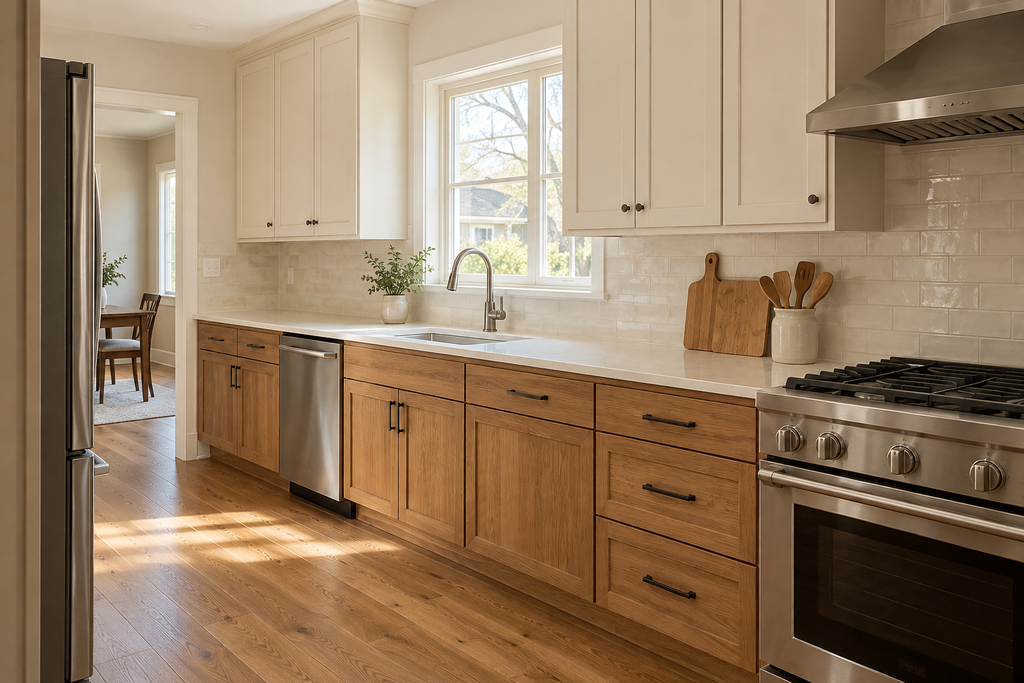
One of the most noticeable kitchen design shifts in 2026 is the move toward warmer and more natural finishes. Here, people are choosing medium-toned wood cabinets, oak finishes, and two-tone combinations. These are making kitchens feel inviting but without looking old-fashioned.
For instance, you could pair natural wood lower cabinets with white or cream upper cabinets. Or maybe you can use a contrasting color on the kitchen island while keeping the main cabinetry neutral.
How much does this cost?
You can expect to pay between $2,000 and $8,000 for selected cabinet painting, refinishing, or refacing work. But if you replace all cabinets, the cost can exceed $8,000.
What are the pros and cons?
Pros: Adds warmth and character to the kitchen. It also makes the kitchen look almost new without changing its layout.
Cons: Full cabinet replacement can be expensive. Also, very dark finishes can make a small kitchen feel less spacious.
Pro tip: If your existing cabinets are structurally sound, you can refinish or reface them before investing in an entirely new set of cabinets.
#2. Smarter cabinets and hidden storage
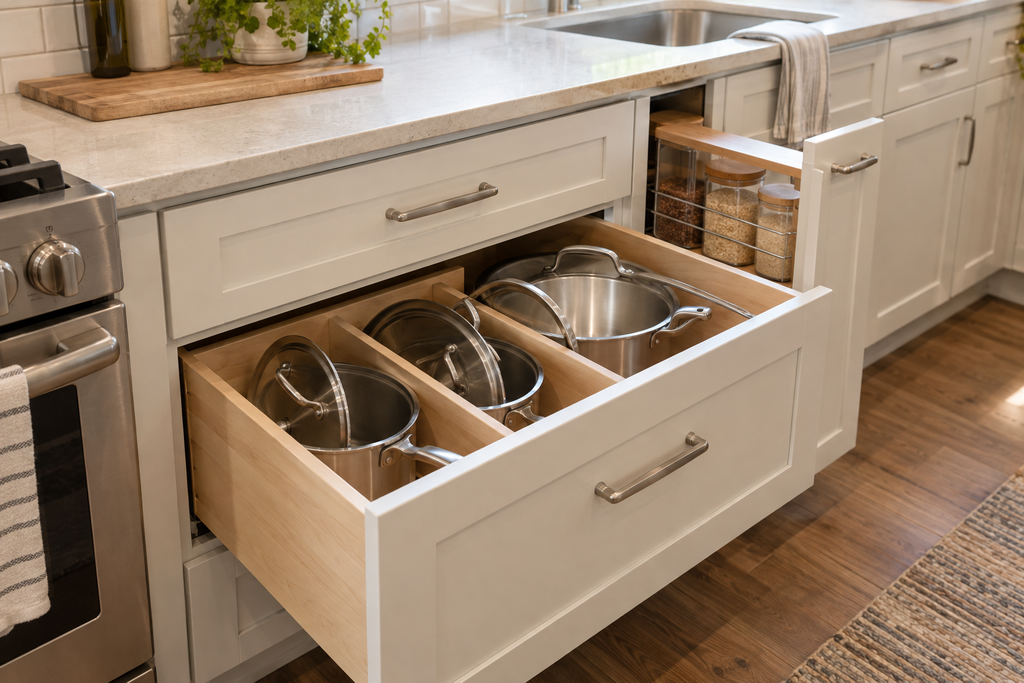
A kitchen is easier to maintain when everything has a place. That is why practical storage upgrades are among the top kitchen cabinet upgrade ideas. You should especially consider these store upgrades if your countertops tend to collect a lot of appliances, utensils, and everyday essentials.
Deep drawers for pots and pans, pull-out shelves for hard-to-reach items, vertical dividers for baking trays, and built-in waste bins are among the go-to options here.
Also, if you have enough space, you can even go for a pantry cabinet or dedicated appliance garage as these help keep the kitchen organized.
How much does this cost?
The base cost starts at just $300 for some storage organizers and goes up-to $2,500 for higher-end storage solutions. Also, if you opt for larger cabinet-storage upgrades, you can expect the cost to be between $2,000 and $8,000.
What are the pros and cons?
Pros: Makes better use of existing space; helps reduce countertop clutter; works well in both small and large kitchens.
Cons: Custom pull-outs and cabinetry costs can add up quickly. Also, some existing cabinets might need modifications to accommodate new organizers.
Pro tip: Before buying organizers, check what you actually store in each cabinet. That’s because a few well-placed upgrades can be more useful and cost-efficient than filling every cabinet with accessories.
#3. Layered kitchen lighting
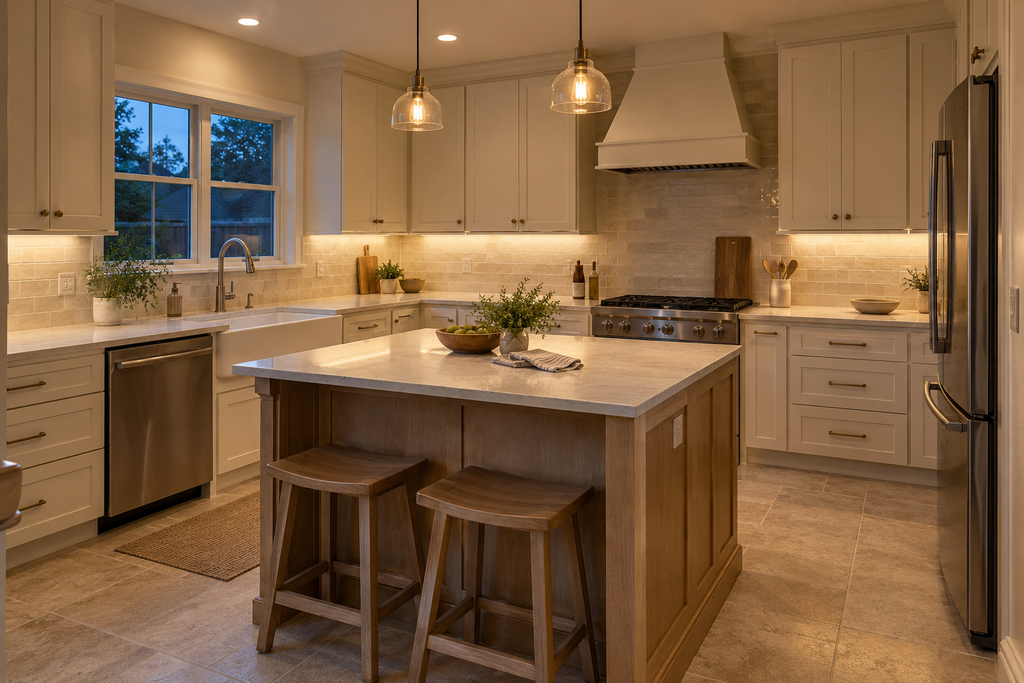
You can have the best fixtures and cabinets in your kitchen, and it can still be incomplete without property lighting. That’s because you need enough light to prepare meals safely, see what you are doing, and create a comfortable atmosphere even when the kitchen is not being used for cooking.
This is why layered lighting is so much in demand among all kitchen lighting ideas. Here, you combine three lighting types, general lighting for the room, task lighting for work surfaces, and accent lighting for visual interest.
You can use recessed ceiling lights, under-cabinet LEDs, and pendant lights above an island, as these work really well together.
How much does this cost?
You can expect the lighting cost to be between $500 and $2,500 for selected fixture or under-cabinet lighting upgrades. But if your project involves installing new wires or major electrical work, the cost can inflate to $2,000-$5,000.
What are the pros and cons?
Pros: Layered lighting improves visibility; makes work surfaces easier to use; and refreshes the kitchen without replacing cabinets or countertops.
Cons: Poorly positioned fixtures can create shadows or glare. Electrical modifications can also increase the cost.
Pro tip: Prioritize lighting over the sink, stove, and main preparation areas. Also, decorative pendants look good, but they should not be your kitchen’s only source of useful light.
#4. Statement backsplashes and full-height slabs
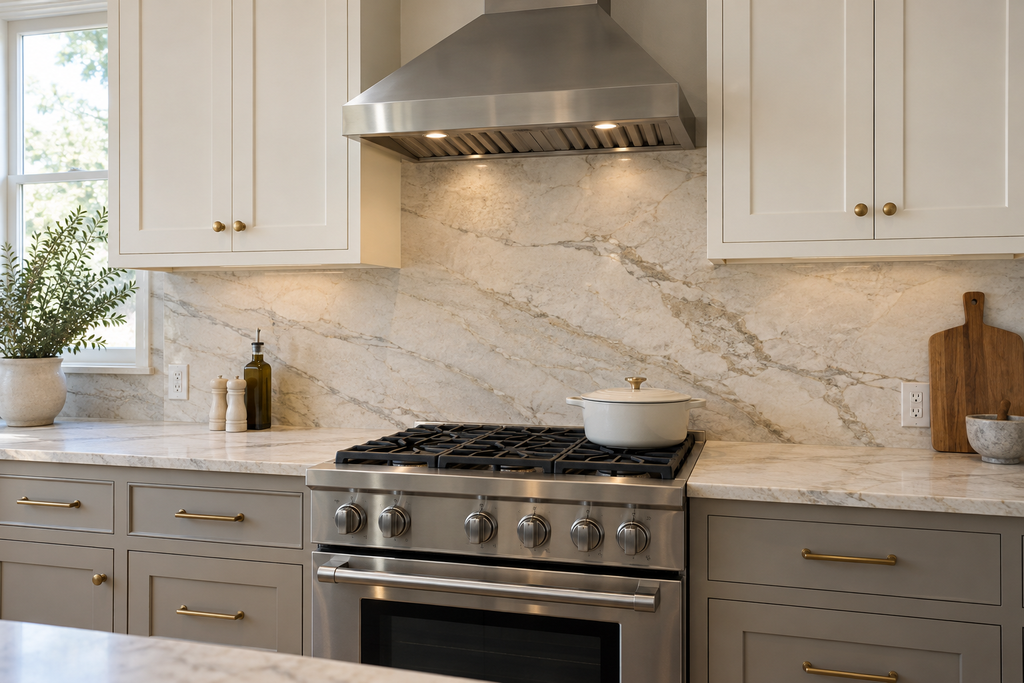
A backsplash can change how your kitchen looks without requiring a complete renovation. Here, you can choose anything from simple, understated tile to larger-format surfaces that create a more continuous look behind the countertop.
Also, a full-height backsplash that extends toward the upper cabinets or range hood can make your kitchen feel more cohesive. Here, you can choose between materials like quartz, natural stone, and carefully selected ceramic or porcelain tiles as each offer different looks and are available in different budgets.
How much does this cost?
Standard backsplash replacement projects can cost you in the range of $800 and $3,000. But if you go for premium slabs, complicated cuts, and more extensive installations, the cost can inflate.
What are the pros and cons?
Pros: It creates a focal point and protects the wall behind cooking and preparation areas. Also, large slabs can reduce the number of grout lines.
Cons: Premium materials and fabrication can be expensive. Also, tile has more grout joints to clean, while natural stone might need extra care depending on the material.
Pro tip: Choose the backsplash alongside your countertop and cabinet finishes. Even attractive materials can clash if their colors, patterns, and textures compete for attention.
#5. Countertops that mix durability with character
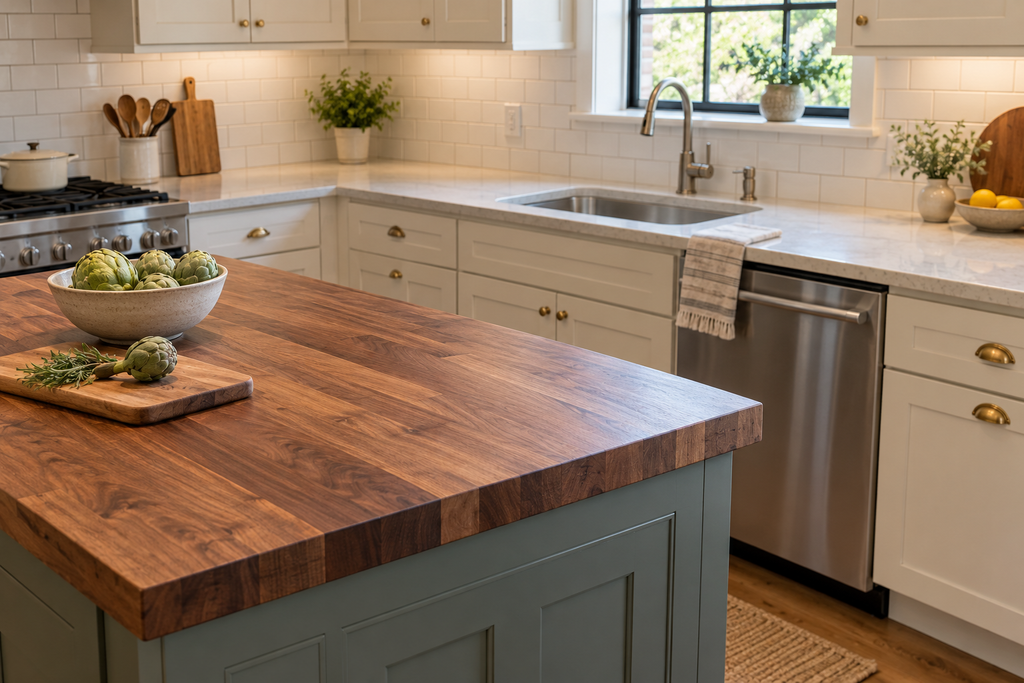
Your countertops cover a large part of your kitchen’s visible workspace. And changing them can make a big difference in how your kitchen looks and feels.
Now, when it comes to a mix of durability with character, quartz countertop is a popular option as it offers a consistent appearance and straightforward maintenance. You can also choose natural stone for more variations and butcher block to make the kitchen island look warm and appealing.
For contrast, you can pair a light countertop with darker cabinets or use a different surface on the island.
However, my only advice here is to choose materials based on how you cook and maintain your kitchen, not just how they look in pictures.
How much does this cost?
Most standard countertop replacement projects cost between $2,000 and $6,000. But premium stone, larger kitchens, and complex installations can cost more.
What are the pros and cons?
Pros: New countertops refresh the kitchen’s appearance with a wide range of colors and finishes. Also, different surfaces can serve different purposes.
Cons: Premium materials can be expensive. Natural stone might also need sealing, while wood surfaces need protection from moisture and heat.
Pro tip: Do ask for the installed price, including removal of the old countertop, fabrication, edge treatments, and installation. The material price alone does not reflect the full cost.
#6. Multifunctional kitchen islands
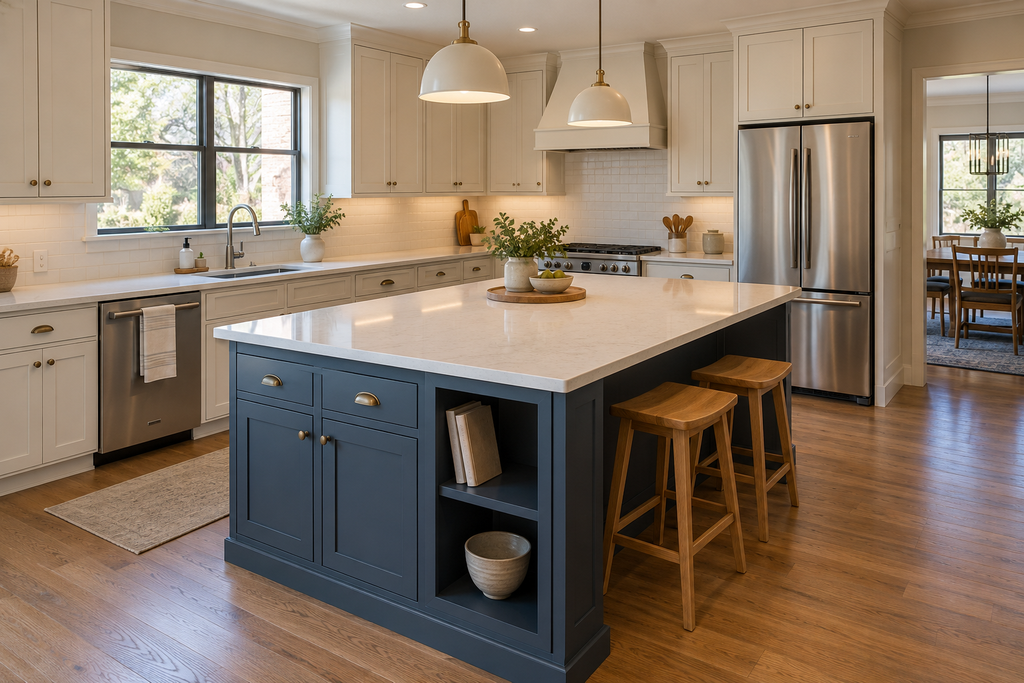
A kitchen island provides extra preparation space, storage, seating, and a place for family members to gather. In a bigger kitchen, it can also accommodate a prep sink, dishwasher, or extra electrical outlets.
But it is important that you plan the island around the room rather than trying to fit the biggest possible island into your space. You also need enough clearance for cabinet doors, appliances, and people moving through the kitchen.
How much does this cost?
A simple kitchen island can cost you in the range of $4,000 and $12,000. But if you add custom cabinets, premium countertops, plumbing, and electrical work in the island area, the cost can easily go up in the $10,000-$25,000 range.
What are the pros and cons?
Pros: Kitchen islands add workspace and storage; create a natural gathering spot; and can make an open kitchen more functional.
Cons: Islands take up floor space and can obstruct movement in smaller kitchens. Also extra utility connections can increase the cost.
Pro tip: If your kitchen cannot accommodate an island comfortably, go for a peninsula instead. It can provide extra workspace and seating without needing clearance on all four sides.
#7. Curved islands and softer design details
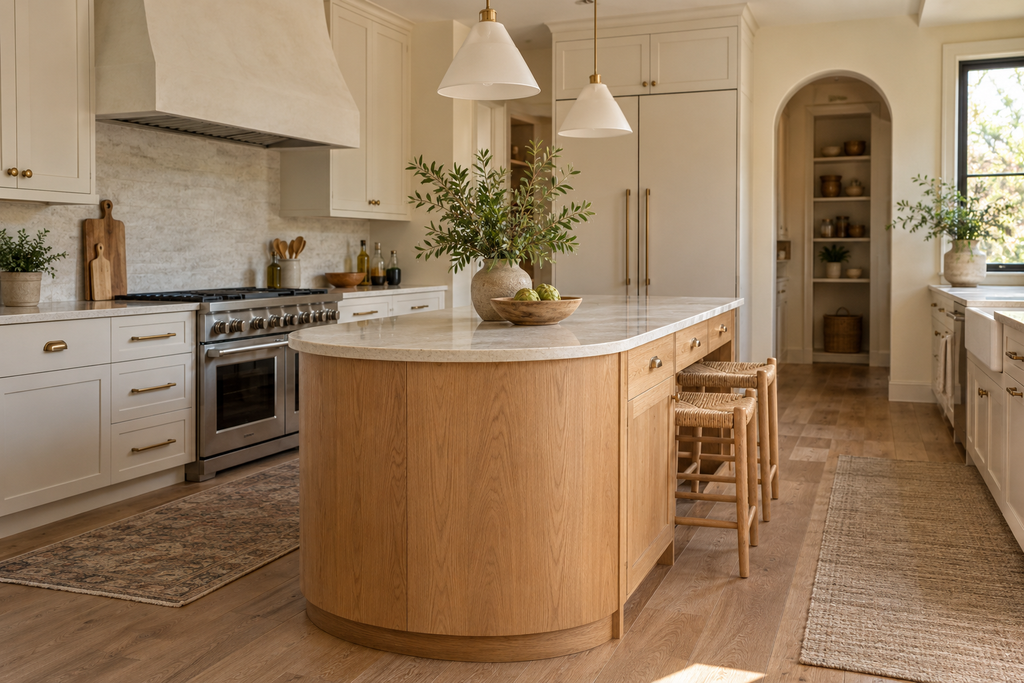
Not every kitchen needs sharp edges and straight lines. You can even have curved island ends, rounded corners, arched openings, and contrasting range hoods for a customized look in your kitchen.
These details can soften a large, angular space and make even a simple kitchen feel more thoughtfully designed.
However, curved islands are best used where they improve your kitchen’s look or utility, and not just because they are fashionable.
How much does this cost?
You can expect to pay between $500 and $3,000 for selective decorative changes or simpler finish upgrades. But for custom curved cabinetry or island, you can expect the cost to be between $5,000 and $15,000, depending on the island’s size and construction.
What are the pros and cons?
Pros: Curved islands add visual interest and create a more distinctive design. Also, the rounded corners can be useful in busy walkways.
Cons: Custom fabrication can be expensive here. Also, unusual shapes can reduce usable storage or countertop space if poorly planned.
Pro tip: Start with one feature, such as a curved island end or an arched pantry opening. You can create a contrasting look without making every element custom-built.
#8. Coffee stations, beverage Nooks, and pantry upgrades
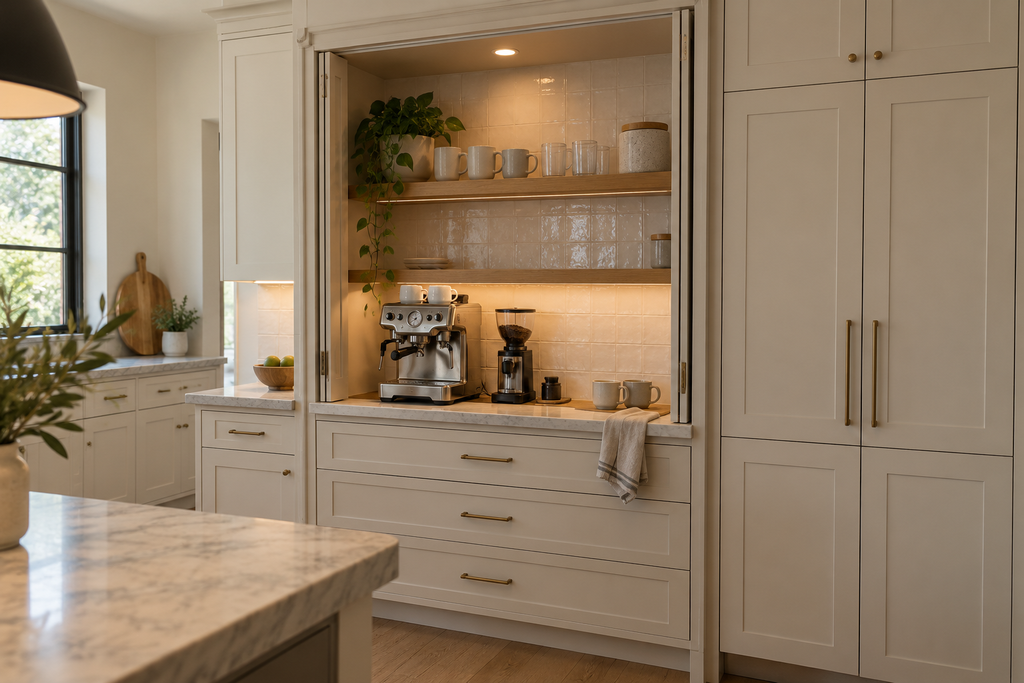
If your kitchen counter is constantly crowded with a coffee maker, mugs, snacks, and small appliances, a dedicated beverage station can be a useful upgrade.
A built-in coffee nook, pantry cabinet, or appliance garage can keep everyday items accessible while reducing clutter on the main work surfaces. Also, in a bigger kitchen, you can add a small beverage refrigerator or a dedicated area for entertaining.
How much does this cost?
A beverage station can cost between $1,000 and $5,000 for a simple built-in nook or cabinet-based station. But if you add accessories like a coffee machine or mini refrigerator, custom cabinetry, plumbing, etc., the costs can increase.
What are the pros and cons?
Pros: Keeps everyday essentials organized; frees up preparation space; can make entertaining more convenient.
Cons: A dedicated beverage station can take up valuable cabinet or counter space. Also, adding a refrigerator or plumbing can increase installation and maintenance costs.
Pro tip: Look for an underused corner or a section of existing cabinetry before planning a new built-in. Repurposing available space can keep your project more affordable.
#9. Colorful cabinets and mixed metals
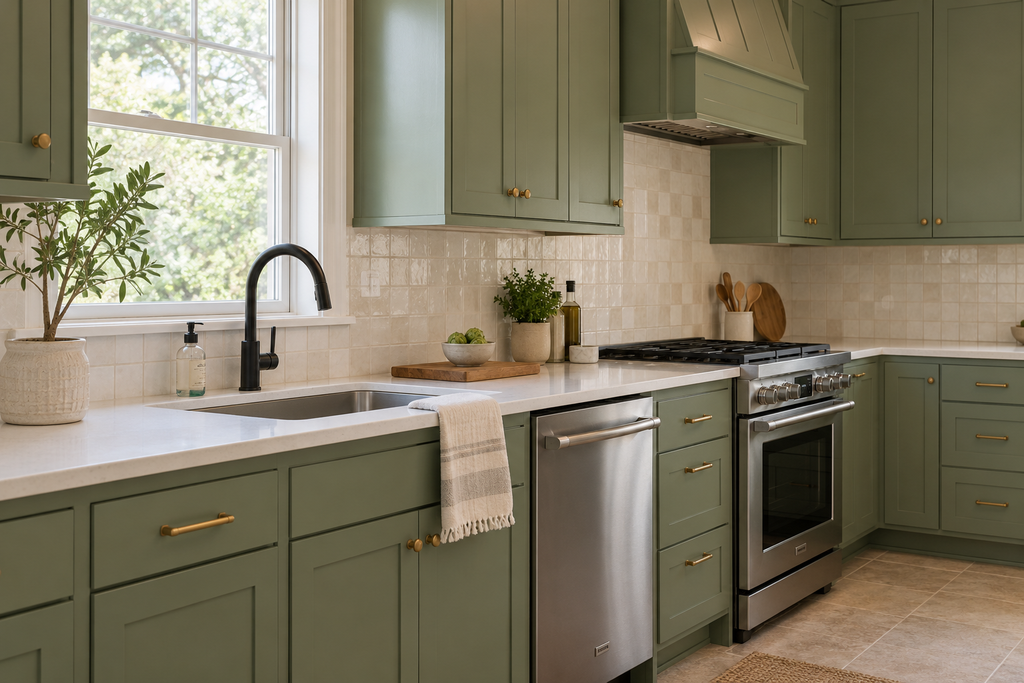
White kitchens are still a classic go-to choice. But sage green, muted blue, warm neutrals, and contrasting cabinet colors can give a kitchen more personality.
You can also combine finishes such as brass, matte black, and stainless steel, if they work together.
How much does this cost?
You can estimate a cost of $1,000 to $5,000 for cabinet painting and selected hardware or fixture upgrades.
What are the pros and cons?
Pros: colorful kitchen cabinets add character without needing any major layout changes.
Cons: Bold cabinet colors can be harder to coordinate with future décor changes. Also, mixing too many metal finishes can make the kitchen look visually cluttered.
#10. Small-kitchen upgrades to make every inch count
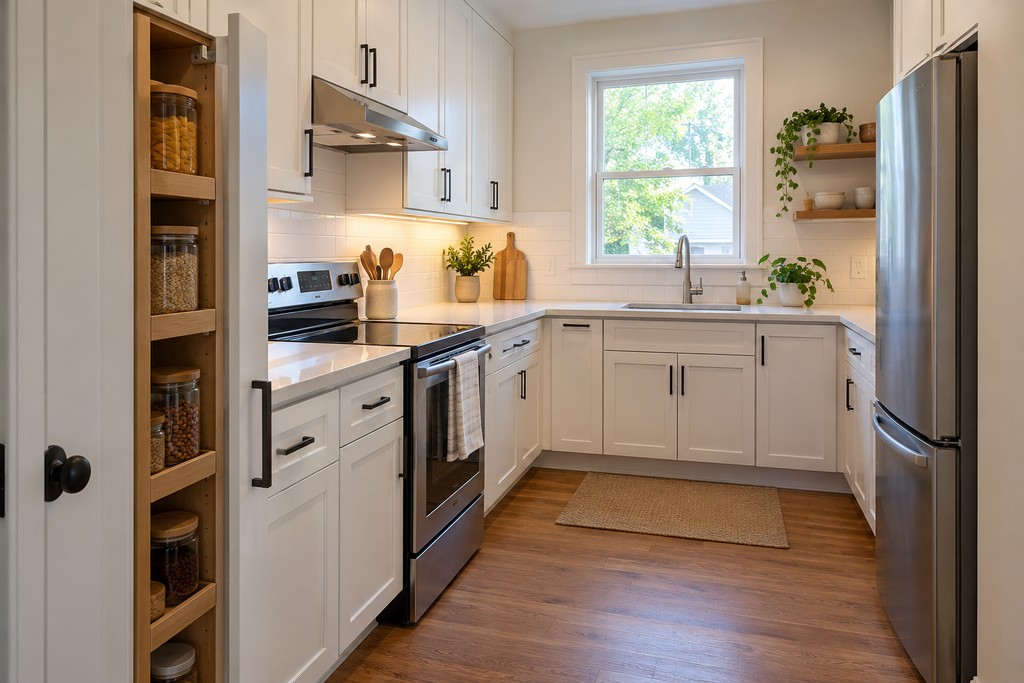
For a small kitchen, better storage, brighter task lighting, and less countertop clutter can be more valuable than expensive finishes. You can choose vertical storage and appropriately sized appliances, among others, to make the available space more functional.
How much does this cost?
Targeted storage, lighting, and finish improvements can cost between $1,500 and $7,500.
What are the pros and cons?
Pros: Smaller targeted upgrades improve usability without the need to expand the kitchen area.
Cons: Custom storage solutions can increase renovation costs, and adding too many shelves or cabinets can make a small kitchen feel cramped.
#11. Better galley and U-shaped kitchen layouts
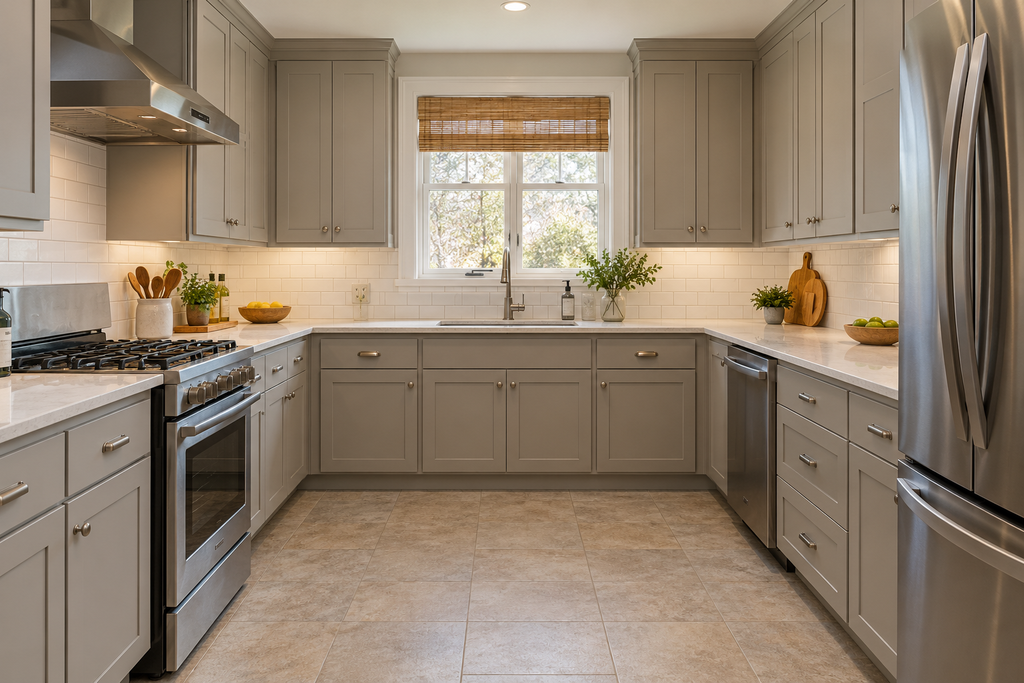
Galley kitchens can work well in narrow spaces because everything is within easy reach.
Also, U-shaped kitchens offer more continuous counter space and storage, provided there is enough room to move comfortably.
How much does this cost?
Expect to pay in the range of $2,000 and $8,000 for selected cabinet or work-surface changes and between $5,000 and $20,000 for broader layout alterations.
What are the pros and cons?
Pros: Galley kitchen renovation ideas and U-shaped layouts help improve workflow and storage in the kitchen.
Cons: Galley kitchens can feel narrow when multiple people are cooking, while U-shaped layouts can limit movement if the central walkway is too small.
#12. Open-concept kitchens and connected living spaces
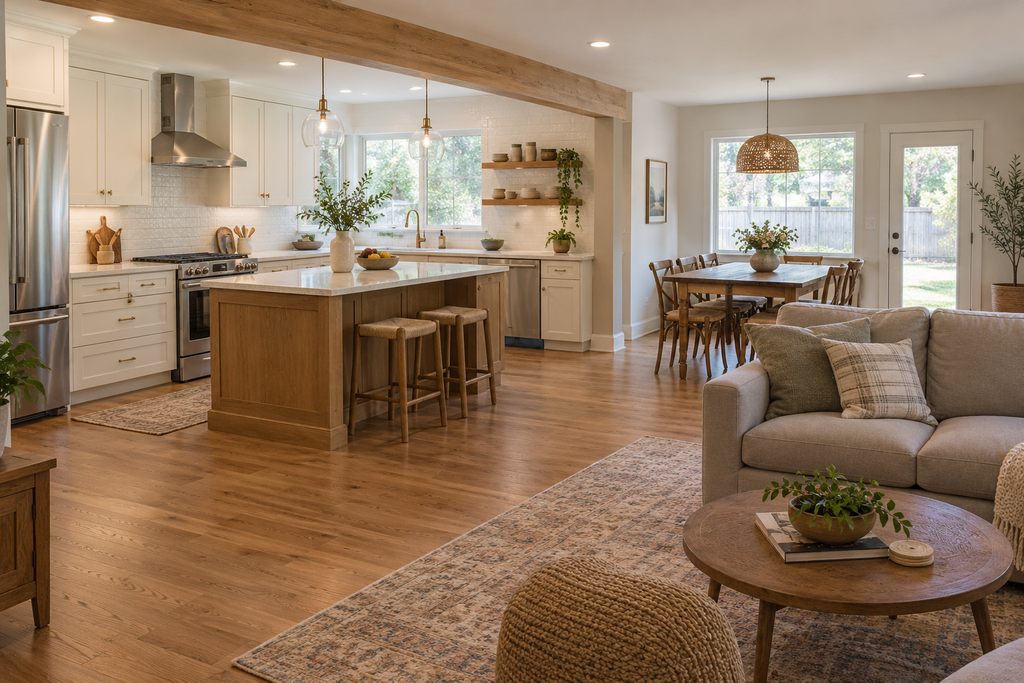
An open-concept kitchen can improve sightlines and make it easier to interact with family or guests.
However, removing a wall is not always necessary; better lighting, a peninsula, or a more open connection between rooms can also achieve some of the same benefits.
How much does this cost?
Selected non-structural improvements can cost between $1,000 and $5,000, while wall removal and related work can cost between $5,000 and $20,000.
What are the pros and cons?
Pros: An open-concept kitchen creates a more connected living area.
Cons: Open concept kitchen ideas don’t account for cooking smells and noise can spread into adjoining living areas. Also, removing walls can be expensive if structural changes or utility relocation are required.
#13. Modern updates that respect old Texas homes
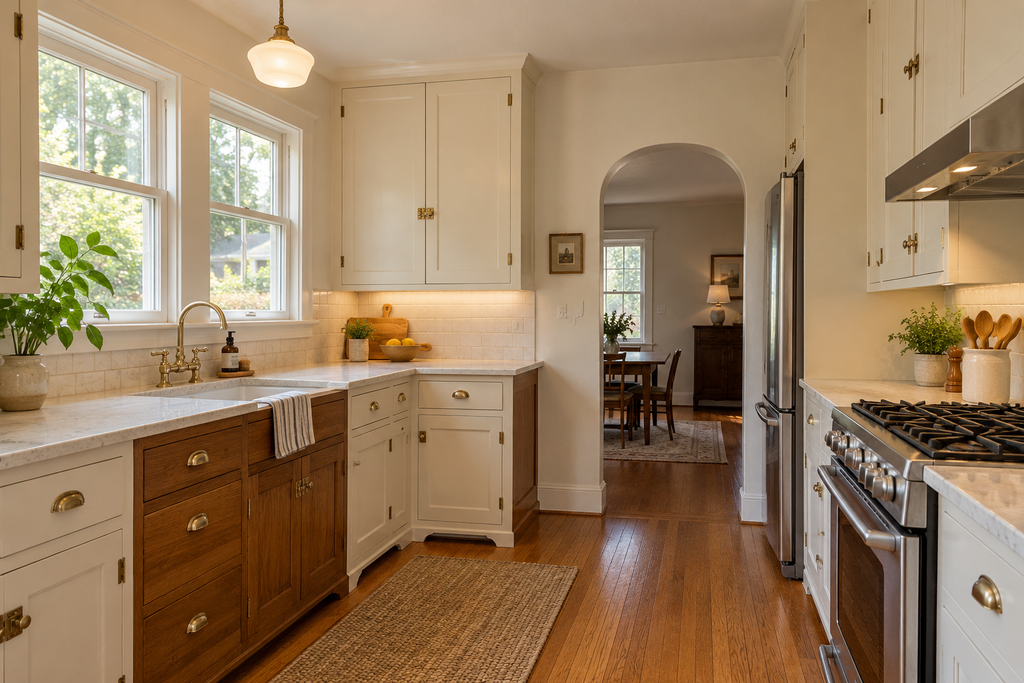
If yours is an old Texas home, your kitchen can benefit a great deal from updated kitchen lighting ideas, refreshed cabinets, improved storage, and new countertops without losing its original character.
But before you start cosmetic work, check for worn wiring, plumbing issues, water damage, or other hidden problems that can affect the renovation.
How much does this cost?
Selected finish and functional upgrades can cost between $3,000 and $12,000. But a more extensive remodel can cost a lot more.
What are the pros and cons?
Pros: Cosmetic finish and functional upgrades preserves character of your kitchen while improving everyday use.
Cons: Older homes can have hidden plumbing, electrical, or structural issues that increase renovation costs. Also, matching new finishes to the home’s original character can require extra planning and costs.
You might also want to read: How Much Does A 10×10 Kitchen Remodel Cost In Houston?
FAQs about kitchen renovation ideas for Texas
What kitchen renovation ideas are trending in Texas in 2026?
Warm wood finishes, practical storage, layered lighting, statement backsplashes, and functional kitchen islands are all worth considering. The best choice will depend on your home’s style, available space, and budget.
What are the best budget kitchen renovation ideas?
Start with cabinet hardware, lighting, cabinet refinishing, or a backsplash update. These changes can refresh a kitchen without the cost of replacing every cabinet or changing the layout.
What works best in a small kitchen?
My advice is to prioritize accessible storage, good task lighting, clear countertops, and a layout that allows comfortable movement. Also, a peninsula might be more practical than an island when space is limited.
How much does a kitchen renovation cost in Houston?
The cost depends on the scope of work. A basic update may cost around $15,000-$20,000 while a mid-range remodel might run between $25,000 and $40,000.
Should I change my kitchen layout or keep the existing one?
You should keep the existing layout if it already works well and your main goals are better finishes or storage.
I suggest you change it only when the current arrangement creates genuine problems with movement, workspace, or accessibility.
To sum up
I am sure you now have a good grasp of the trendiest kitchen renovation ideas in Texas right now. Also, you should now be able to decide which renovation is best suited for your kitchen.
As you can see, the best kitchen renovation is not necessarily the trendiest one. It is the one that makes your kitchen more functional, suits your home, and fits your budget.
Got more questions or want to renovate your kitchen?
You can get in touch with us!
At Maestro Property Solutions, we are seasoned kitchen renovation experts serving all of the Houston Metropolitan Area and beyond. Tell us about your renovation goals and budget and we will plan kitchen renovation exactly around what you need and your budget.
Habib Othman is the CEO and Co-Owner of Maestro Property Solutions. A Texas Professional Engineer, expert builder, and property inspector, Habib brings extensive experience in construction, property evaluation, renovation, and building systems. Through his hands-on expertise and engineering background, he helps homeowners and property owners make informed decisions about repairs, renovations, foundations, and other property improvements.